Senator Kennedy Pushes SAVE Act, Calls for “Common Sense” Approach to Voting Requirements
Senator Kennedy Pushes SAVE Act
Senator Kennedy Pushes SAVE Act, Calls for “Common Sense” Approach to Voting Requirements
Debate Intensifies Over Election Integrity
WASHINGTON, D.C. — As debate intensifies in the U.S. Senate over election integrity and immigration policy, Louisiana Senator John Kennedy is making a forceful case for the SAVE America Act, arguing that requiring proof of citizenship to vote is a matter of basic fairness and “common sense.”
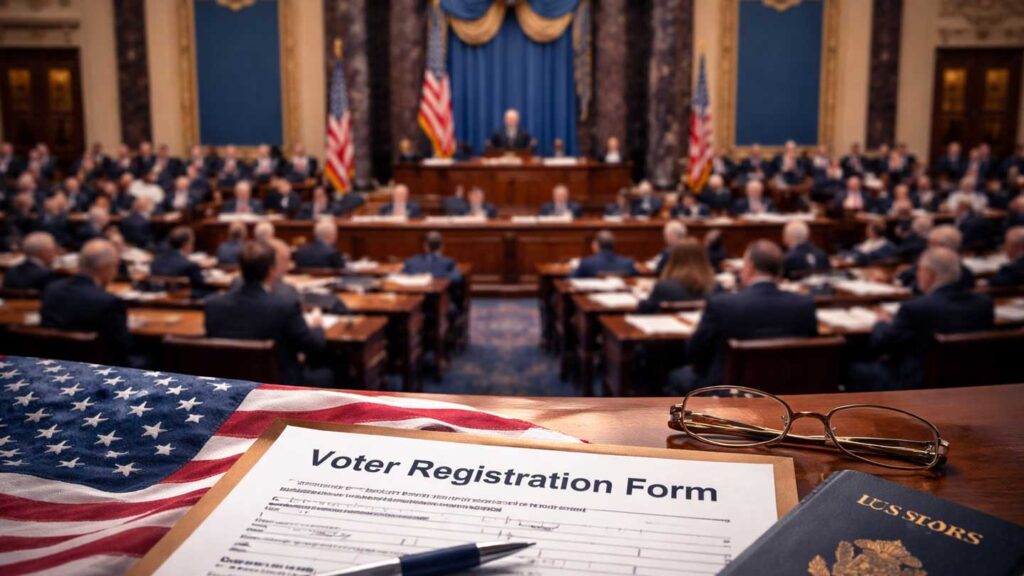
The proposed legislation, formally known as the SAVE Act, would require individuals to provide documentation proving U.S. citizenship when registering to vote, as well as identification at the polls. Supporters of the bill say it reinforces the foundational principle of “one citizen, one vote,” while critics warn it could create barriers for eligible voters.
Strong Public Support, Political Resistance
According to recent polling cited during the Senate debate, the measure enjoys strong public backing, including support from a significant majority of independent voters. However, despite that apparent popularity, the bill faces stiff opposition from Democrats and even some Republicans, raising doubts about its path forward in a closely divided Senate.
Senator Kennedy, a co-sponsor of the legislation, did not mince words when discussing the political dynamics surrounding the bill. He expressed skepticism that Democratic lawmakers would support the measure, suggesting that partisan divisions could ultimately prevent it from reaching the 60 votes typically required to pass legislation in the Senate.
“One Citizen, One Vote” at the Core
“The issue is very simple,” Kennedy said during the discussion. “When you register to vote, you ought to prove that you’re an American. And when you go to vote, you ought to prove you are who you say you are.”
Beyond the voting requirements, Kennedy also tied the debate to broader concerns about immigration, claiming that the United States has seen a significant influx of migrants in recent years. He suggested that some Americans believe these individuals could eventually be registered to vote, though he acknowledged uncertainty about the accuracy of that claim.
A “Plan B”: Using Reconciliation
Facing the likelihood that the SAVE Act may not reach the necessary 60-vote threshold, Kennedy proposed an alternative strategy: passing the legislation through the budget reconciliation process. Unlike standard Senate procedure, reconciliation allows certain bills to pass with a simple majority of 50 votes, plus the vice president’s tie-breaking vote.
Kennedy argued that pursuing reconciliation could provide a viable “Plan B” if bipartisan support remains out of reach. However, he admitted that his approach is not widely supported even within his own party, with some Republican leaders questioning whether the bill would meet the strict budgetary requirements needed to qualify for reconciliation.
Still, Kennedy pushed back on those concerns, suggesting that legal experts could craft a version of the bill that satisfies the rules. He emphasized that lawmakers should at least attempt the strategy rather than abandon the effort altogether.
“You Don’t Have to Be Einstein’s Cousin”
“You don’t have to be Einstein’s cousin to see all this coming,” Kennedy remarked, underscoring his belief that the current legislative approach is unlikely to succeed without a change in tactics.
The senator framed the situation as a matter of practicality, urging colleagues to consider alternative routes rather than relying solely on traditional legislative pathways that may be doomed to fail.
Tied to Broader Federal Funding Battles
Kennedy also connected the debate to ongoing negotiations over federal funding, particularly efforts to keep the Department of Homeland Security operational. He suggested that reconciliation will likely be used for budget-related measures in the near future, and argued that including the SAVE Act in that process could be a strategic move.
Uncertain Path Forward
Despite Kennedy’s advocacy, the path forward remains uncertain. Key Republican senators have signaled varying levels of support for the bill, and Democratic opposition appears firm. As a result, the SAVE Act has become a flashpoint in a broader national conversation about election security, voter access, and the role of federal oversight in the electoral process.
For now, the Senate continues its debate, with lawmakers weighing both the policy implications and the political realities of passing such legislation. Whether Kennedy’s call for a reconciliation strategy gains traction may ultimately determine the fate of the SAVE Act—and shape the next chapter in the ongoing debate over voting rights in America.